Texas Real Estate Investor InsightsHow Much Earnest Money Should I Put Down?When purchasing Texas investment property, one of the first numbers a buyer may have to decide is the earnest money.

Dated: June 12 2026
Views: 8
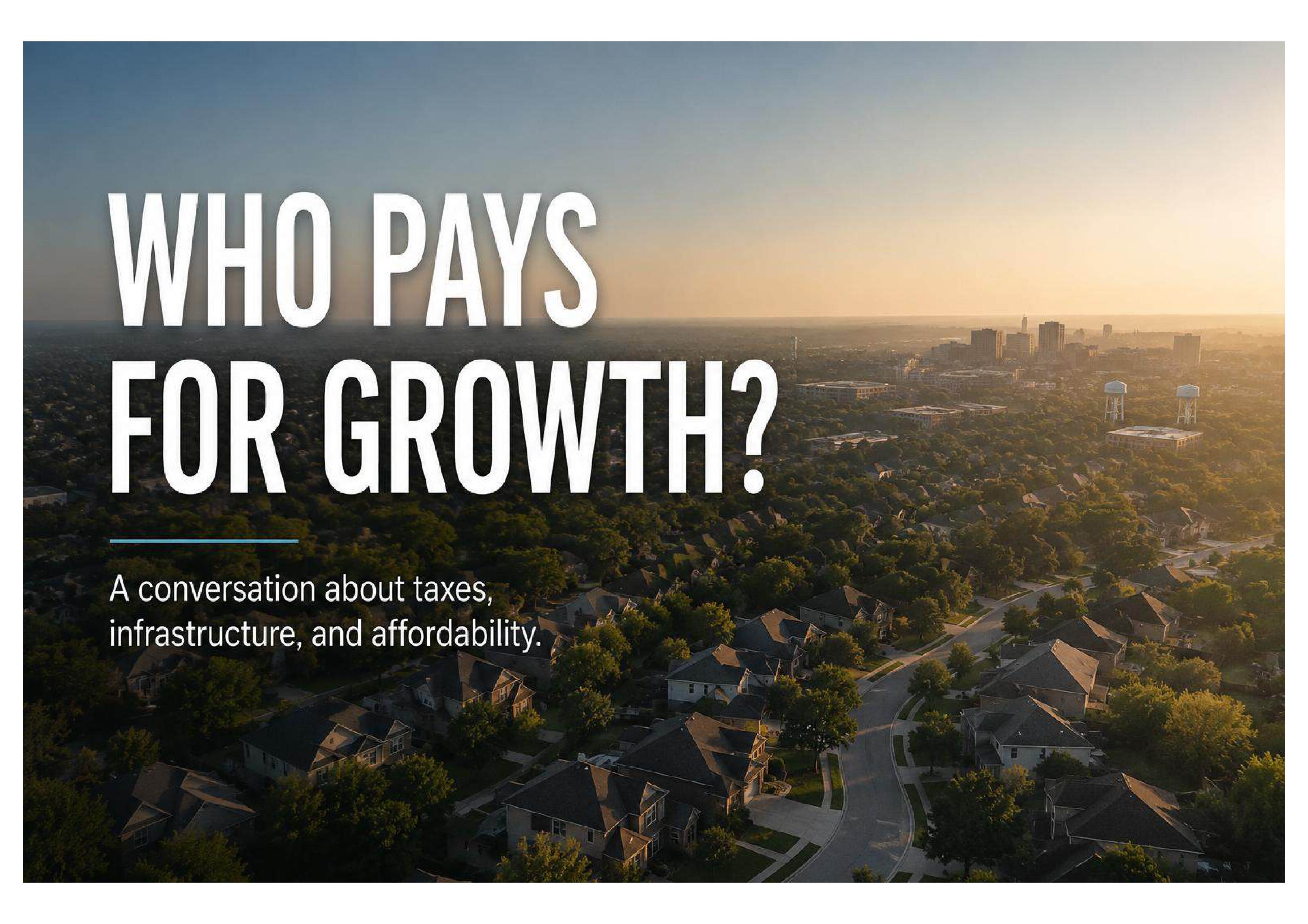
Few issues get Texas homeowners' attention faster than property taxes.
That's one reason recent increases to the Texas homestead exemption have been so popular. Lawmakers raised the school tax homestead exemption from $100,000 to $140,000 for most homeowners, with eligible seniors and disabled Texans receiving even larger exemptions.
For many families, that's meaningful relief.
Property taxes are one of the largest ongoing costs of homeownership in Texas. When appraised values rise, many homeowners feel the impact long before they ever think about selling their home.
It's easy to understand why larger exemptions are popular.
But there is another side of the conversation that receives far less attention.
What happens to the revenue those taxes would have generated?
The argument in favor of larger homestead exemptions is straightforward.
Homeowners keep more of their money.
Retirees living on fixed incomes receive additional protection.
Housing becomes more affordable for people already struggling with rising costs.
In a state where affordability has become a growing concern, those are meaningful benefits.
For many homeowners, the exemption feels like a long-overdue acknowledgment that rapidly rising property values do not always mean rapidly rising household incomes.
That's a reasonable argument.
But it's only half the conversation.
One reason this issue can feel confusing is that many homeowners are experiencing two realities at the same time.
On one hand, larger homestead exemptions may reduce the amount of property tax owed.
On the other hand, many families continue to face rising costs almost everywhere else.
Insurance premiums have increased.
Construction and repair costs have increased.
Everyday goods and services have become more expensive.
And in communities like Bryan-College Station, many homeowners have spent years watching appraised values climb as the local market catches up to broader economic conditions.
The result is that homeowners may receive tax relief while still feeling significant pressure on their overall household budget.
That's not a contradiction.
It's simply a reminder that affordability is about more than a single line item on a tax bill.
When tax revenue decreases, the need for public services doesn't automatically decrease with it.
Schools still operate.
Roads still require maintenance.
Utilities still need upgrades.
Emergency services still need staffing and equipment.
Growth still requires infrastructure.
The question isn't whether tax relief has value.
The question is how communities replace what those taxes were helping fund.
Recent Texas legislation addresses part of that challenge by increasing state funding intended to offset revenue losses associated with larger homestead exemptions.
But that doesn't eliminate the broader question.
If funding doesn't come from one source, where does it come from instead?
This question becomes especially important in growing communities.
Bryan-College Station isn't standing still.
Texas A&M University continues to attract students, faculty, research investment, and economic activity. New neighborhoods continue to emerge. Commercial development continues to expand. Population growth continues across much of the Brazos Valley.
Most residents would likely view those trends as positive.
But growth creates demands.
More residents require more infrastructure.
More infrastructure requires investment.
And investment requires funding.
That reality exists whether we're talking about roads, water systems, drainage improvements, public safety, schools, or future community needs.
Growth itself is rarely the difficult part.
Paying for growth is where the harder conversations begin.
One reason tax policy debates become so passionate is that everyone sees the benefits differently.
Homeowners may focus on affordability.
Local governments may focus on infrastructure needs.
School districts may focus on funding stability.
Businesses may focus on economic competitiveness.
None of those concerns are inherently wrong.
The challenge is that every tax policy creates tradeoffs.
A tax reduction can provide meaningful relief.
It can also create pressure to identify alternative funding sources.
A larger exemption can help homeowners today.
It can also raise questions about how future growth will be funded tomorrow.
These aren't arguments against homestead exemptions.
They're simply realities that accompany them.
The debate surrounding homestead exemptions is often framed as a simple choice between higher taxes and lower taxes.
In reality, the conversation is more complicated.
The real question isn't whether homeowners appreciate tax relief.
Most do.
The real question is how Texas—and growing communities like Bryan-College Station—balance affordability with the infrastructure and services residents expect.
Because roads still need to be built.
Water systems still need to expand.
Schools still need funding.
Communities still need to prepare for growth.
Those obligations don't disappear when tax bills get smaller.
They simply shift somewhere else.
The recent increase in Texas homestead exemptions will provide meaningful savings for many homeowners. That's a benefit worth recognizing.
But tax policy is rarely just about what taxpayers save.
It's also about what communities need.
As Bryan-College Station continues to grow, conversations about property taxes, infrastructure, housing affordability, and public investment are likely to become increasingly connected.
The question isn't whether tax relief is valuable.
The question is how communities pay for the things that tax relief no longer funds.
And that may be one of the most important growth conversations Texas faces in the years ahead.
#DannySellsBCS #NextHomeBCS #GROWTH #HomesteadExemption #PropertyTaxes

Native Texan. Fightin' Texas Aggie Class of '94. A few years back when purchasing our home here in BCS while still living in NYC, I found that buying a home can be sometimes confusing and frustrat....
Texas Real Estate Investor InsightsHow Much Earnest Money Should I Put Down?When purchasing Texas investment property, one of the first numbers a buyer may have to decide is the earnest money.
Texas Real Estate Investor InsightsShould I Buy an Investment Property That Already Has a Tenant?Buying an investment property that already has a tenant can sound like an ideal arrangement.You close
Texas Real Estate Investor InsightsCan I Use a 1031 Exchange When I Sell My Investment Property?If you're planning to sell an investment property and purchase another, one question may come up early
Texas Real Estate Investor InsightsShould I Buy My Investment Property Through an LLC?Buying an investment property raises an important question early in the process: Should you buy the property in
The accuracy of all information, regardless of source, including but not limited to open house information, square footages and lot sizes, is deemed reliable but not guaranteed and should be personally verified through personal inspection by and/or with the appropriate professionals. The data contained herein is copyrighted by Houston Realtors Information Service, Inc. and is protected by all applicable copyright laws. Any unauthorized dissemination of this information is in violation of copyright laws and is strictly prohibited. Copyright 2026 Houston Association of REALTORS, Inc. All rights reserved. Last Update: September 23, 2026 3:19 AM UTC The information being provided by Houston Association of REALTORS, Inc. is for the consumer's personal, non-commercial use and may not be used for any purpose other than to identify prospective properties consumers may be interested in purchasing. Any information relating to real estate for sale referenced on this web site comes from the Internet Data Exchange (IDX) program of the Houston Association of REALTORS, Inc. This web site may reference real estate listing(s) held by a brokerage firm other
than the broker and/or agent who owns this web site.
The information being provided by Houston Association of REALTORS, Inc. is for the consumer's personal, non-commercial use and may not be used for any purpose other than to identify prospective properties consumers may be interested in purchasing. Any information relating to real estate for sale referenced on this web site comes from the Internet Data Exchange (IDX) program of the Houston Association of REALTORS, Inc. This web site may reference real estate listing(s) held by a brokerage firm other
than the broker and/or agent who owns this web site.
 © 2026 Bryan College Station Regional Association of Realtors. All rights reserved. Information deemed to be reliable but not guaranteed. The data relating to real estate for sale on this website comes in part from the Broker Reciprocitysm Program. Real estate listings held by brokerage firms other than NextHome Realty Solutions BCS are marked with the BR logo and detailed information about them includes the name of the listing brokers. Listing broker has attempted to offer accurate data, but
buyers are advised to confirm all items. Information last updated on September 23, 2026 3:45 AM UTC
Show More...
© 2026 Bryan College Station Regional Association of Realtors. All rights reserved. Information deemed to be reliable but not guaranteed. The data relating to real estate for sale on this website comes in part from the Broker Reciprocitysm Program. Real estate listings held by brokerage firms other than NextHome Realty Solutions BCS are marked with the BR logo and detailed information about them includes the name of the listing brokers. Listing broker has attempted to offer accurate data, but
buyers are advised to confirm all items. Information last updated on September 23, 2026 3:45 AM UTC
Show More...
