Texas Real Estate Investor InsightsHow Much Earnest Money Should I Put Down?When purchasing Texas investment property, one of the first numbers a buyer may have to decide is the earnest money.
Dated: May 25 2026
Views: 13

One of the first questions I hear from sellers in Bryan-College Station is:
"What should we do before we put the house on the market?"
Most people immediately start thinking about upgrades.
New countertops.
New flooring.
A kitchen refresh.
Sometimes those projects make sense.
Many times, they don't.
In my experience, sellers often focus on the wrong thing.
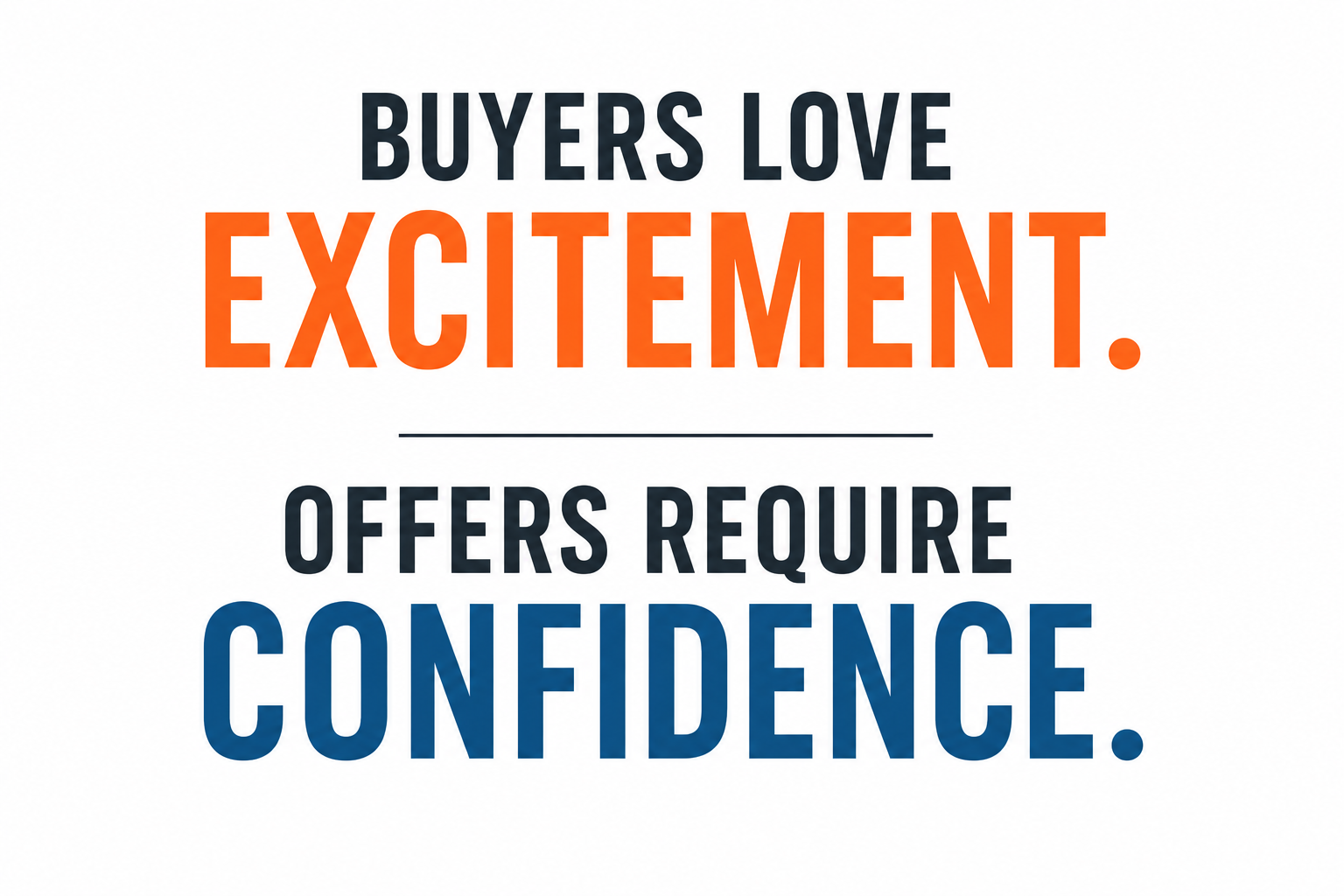
Upgrades create excitement. Repairs create confidence.
And confidence is usually what gets a buyer to make an offer.
Most buyers won't walk away because of one small maintenance item.
But when they see several at once, they start asking bigger questions.
A dripping faucet.
A sticking door.
A stained ceiling.
A broken blind.
A loose cabinet handle.
None of those are expensive problems.
What they create is doubt.
Buyers begin wondering whether other maintenance has been deferred too.
That's why I usually recommend addressing basic repairs before spending money on major cosmetic projects.
Every home has imperfections.
Most buyers expect that.
What makes them nervous are signs of possible larger problems:
If buyers see these issues, they'll often assume the problem is worse than it actually is.
That doesn't always mean you must repair everything before listing.
But it does mean you should have a strategy.
Ignoring it is rarely the best one.
A lot of sellers ask whether they should update the kitchen, renovate a bathroom, or replace flooring before listing.
My answer is always the same:
Will this help the home sell for more, sell faster, or avoid problems during negotiations?
If the answer is yes, it's worth discussing.
If the answer is simply "it would look nicer," I'd think carefully before spending the money.
Not every improvement changes the outcome of the sale.
Sometimes a fresh coat of neutral paint is worth every penny.
Sometimes a major renovation is not.
The key is understanding the difference before the money is spent.
Buyers often start forming opinions before they ever step inside.
Fortunately, curb appeal doesn't have to be expensive.
Mow the lawn.
Trim overgrowth.
Clean the entry.
Pressure wash where needed.
Replace the worn doormat.
Make sure exterior lights work.
You're not trying to create a magazine cover.
You're trying to create confidence.
This may not be the most exciting advice I give sellers, but it's one of the most effective:
Clean. Then declutter. Then clean again.
A clean home feels maintained.
A decluttered home feels larger.
And both help buyers focus on the house instead of the stuff inside it.
Pay special attention to kitchens, bathrooms, closets, and storage areas. Buyers want to understand how the home lives, not wonder where they'll put their belongings.
The same goes for odors.
Whether it's pets, smoke, mildew, or yesterday's dinner, buyers notice smells immediately.
You may be accustomed to them.
Buyers aren't.
One of the hardest parts of selling is that owners stop seeing what buyers immediately notice.
You've walked past the scuff mark for years.
You've stopped noticing the loose handrail.
You don't smell the dog anymore.
Buyers notice all of it.
Before listing, try walking through the home as if you've never seen it before.
Ask yourself:
Those answers usually point you toward the right preparation plan.
Whether we're talking about repairs, curb appeal, paint, decluttering, or deep cleaning, they all serve the same purpose:
Helping buyers feel confident about the home.
Most buyers are not expecting perfection.
They are looking for signs that the property has been cared for and that major surprises are unlikely after closing.
That's why preparing a home for sale isn't about creating a model home.
It's about removing distractions and allowing buyers to focus on the features that made you love the home in the first place.

Preparing your home for sale isn't about doing everything.
It's about doing the things that matter.
The homes that show best are rarely the homes with the most expensive upgrades.
They're the homes that feel clean, cared for, and well maintained.
Whether you're selling a starter home in Bryan, a family home in College Station, or an investment property near Texas A&M, the goal is the same: help buyers focus on the home's strengths rather than preventable distractions.
Because at the end of the day, upgrades may create excitement—but confidence is what helps buyers move forward.
In Part 2, we'll look at what happens next: pricing, photography, and why buyers usually see your marketing long before they ever see your front door.

Native Texan. Fightin' Texas Aggie Class of '94. A few years back when purchasing our home here in BCS while still living in NYC, I found that buying a home can be sometimes confusing and frustrat....
Texas Real Estate Investor InsightsHow Much Earnest Money Should I Put Down?When purchasing Texas investment property, one of the first numbers a buyer may have to decide is the earnest money.
Texas Real Estate Investor InsightsShould I Buy an Investment Property That Already Has a Tenant?Buying an investment property that already has a tenant can sound like an ideal arrangement.You close
Texas Real Estate Investor InsightsCan I Use a 1031 Exchange When I Sell My Investment Property?If you're planning to sell an investment property and purchase another, one question may come up early
Texas Real Estate Investor InsightsShould I Buy My Investment Property Through an LLC?Buying an investment property raises an important question early in the process: Should you buy the property in
The accuracy of all information, regardless of source, including but not limited to open house information, square footages and lot sizes, is deemed reliable but not guaranteed and should be personally verified through personal inspection by and/or with the appropriate professionals. The data contained herein is copyrighted by Houston Realtors Information Service, Inc. and is protected by all applicable copyright laws. Any unauthorized dissemination of this information is in violation of copyright laws and is strictly prohibited. Copyright 2026 Houston Association of REALTORS, Inc. All rights reserved. Last Update: September 24, 2026 9:10 AM UTC The information being provided by Houston Association of REALTORS, Inc. is for the consumer's personal, non-commercial use and may not be used for any purpose other than to identify prospective properties consumers may be interested in purchasing. Any information relating to real estate for sale referenced on this web site comes from the Internet Data Exchange (IDX) program of the Houston Association of REALTORS, Inc. This web site may reference real estate listing(s) held by a brokerage firm other
than the broker and/or agent who owns this web site.
The information being provided by Houston Association of REALTORS, Inc. is for the consumer's personal, non-commercial use and may not be used for any purpose other than to identify prospective properties consumers may be interested in purchasing. Any information relating to real estate for sale referenced on this web site comes from the Internet Data Exchange (IDX) program of the Houston Association of REALTORS, Inc. This web site may reference real estate listing(s) held by a brokerage firm other
than the broker and/or agent who owns this web site.
 © 2026 Bryan College Station Regional Association of Realtors. All rights reserved. Information deemed to be reliable but not guaranteed. The data relating to real estate for sale on this website comes in part from the Broker Reciprocitysm Program. Real estate listings held by brokerage firms other than NextHome Realty Solutions BCS are marked with the BR logo and detailed information about them includes the name of the listing brokers. Listing broker has attempted to offer accurate data, but
buyers are advised to confirm all items. Information last updated on September 24, 2026 8:00 AM UTC
Show More...
© 2026 Bryan College Station Regional Association of Realtors. All rights reserved. Information deemed to be reliable but not guaranteed. The data relating to real estate for sale on this website comes in part from the Broker Reciprocitysm Program. Real estate listings held by brokerage firms other than NextHome Realty Solutions BCS are marked with the BR logo and detailed information about them includes the name of the listing brokers. Listing broker has attempted to offer accurate data, but
buyers are advised to confirm all items. Information last updated on September 24, 2026 8:00 AM UTC
Show More...
